

 No Comments
Children rarely say, “I can’t see properly.” Most don’t know their vision isn’t normal. They just adapt.
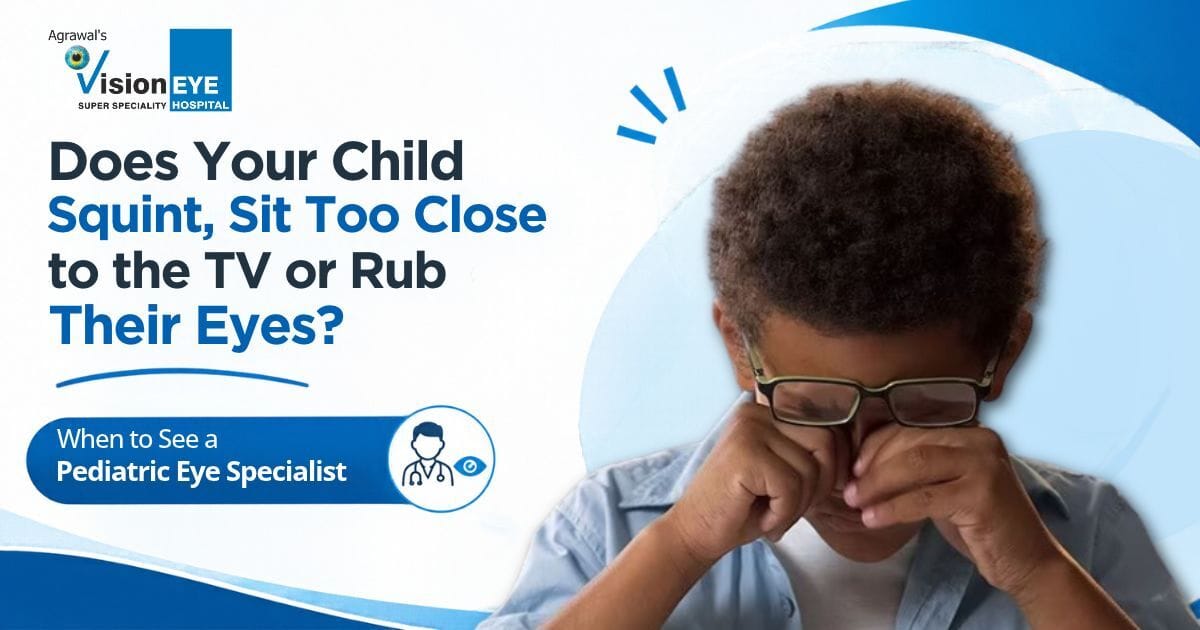
So the clues show up in their habits instead. A child who squints at the board, creeps closer to the TV or rubs their eyes all evening may be telling you something. Spotting these signs early, and seeing a pediatric eye specialist in time, can protect your child’s sight for life.
When Should Parents Book a Children's Eye Doctor Visit?
Book a visit straight away if you notice squinting, eye rubbing, a wandering eye or your child sitting very close to screens. Even without symptoms, a pediatric eye specialist check is wise before your child starts school. Early checks catch problems while they’re easiest to treat.
7 Warning Signs of Vision Problems in Children
Many vision problems in children don’t cause pain, which is why they’re easy to miss. Watch for these signs:
- Squinting or narrowing the eyes to see clearly
- Sitting too close to the TV or holding books near the face
- Frequent eye rubbing, even when they aren’t tired
- Tilting the head or covering one eye to look at things
- An eye that turns inwards, outwards, up or down
- Headaches or avoiding reading and homework
- A white glow in the pupil in photos. This needs urgent attention.
Lazy Eye Symptoms in Children That Parents Often Miss
Lazy eye, or amblyopia, happens when one eye doesn’t develop normal vision. The brain starts to favour the stronger eye.
The tricky part? Lazy eye symptoms in children can be very subtle. Your child may bump into things, struggle with depth or seem clumsy at catching a ball. Some children show no obvious signs at all, which is why routine checks matter.
The American Academy of Ophthalmology notes that treatment becomes less effective with age. If left untreated, amblyopia can cause permanent vision loss. That’s why timing matters so much.
Why Screen Time Makes Eye Check-Ups More Important
Short-sightedness, or myopia, is rising fast in Indian cities. A study in Ophthalmic and Physiological Optics found myopia in urban children aged 5 to 15 rose from 4.44% in 1999 to 21.15% in 2019. The researchers project it could reach nearly half of urban children by 2050.
More screens and less time outdoors are part of the picture. Regular check-ups help spot vision problems in children before they affect schoolwork or confidence. At home, encourage outdoor play and regular screen breaks.
What Happens During a Children's Eye Examination?
A children’s eye examination is quick, painless and adapted to your child’s age. Younger children may match pictures or shapes instead of reading letters.
The doctor checks how sharp the vision is, how the eyes work together and whether glasses are needed. Eye drops may be used to widen the pupils for a clearer look inside. Bring any glasses your child already wears, along with notes on what you’ve noticed at home.
Parents choosing a pediatric eye specialist in Surat should look for a calm, child-friendly setting. A good children’s eye examination feels more like a game than a test.
Clear Sight Today, Brighter Days Tomorrow
Your child’s eyes are still developing, and early care makes a real difference. If you’ve noticed any of the signs above, don’t wait for them to grow out of it.
Vision Eye Hospital has cared for families in Surat since 2011, with branches on Ghod Dod Road, Vesu and Parvat Patia. Our team includes an experienced pediatric eye specialist who works gently with young patients. Explore our pediatric eye care services and book a visit with a trusted pediatric eye specialist in Surat today.
FAQs :
1. At what age should my child have their first eye test?
Newborns get a basic eye check, but a full children’s eye examination is usually recommended around age three, and again before starting school. See a specialist sooner if you notice squinting, eye turning or any other unusual habits at all.
2. Can lazy eyes be treated?
Yes, especially when caught early. Treatment may include glasses, patching the stronger eye or special eye drops. It works best in young children, so spotting lazy eye symptoms in children quickly gives them the best chance of good, lasting vision.
3. Does sitting close to the TV damage a child's eyes?
There’s no strong evidence that it causes lasting damage. However, it can be a sign of short-sightedness. If your child keeps moving closer to screens, it’s worth booking an eye check to rule out any underlying vision problem early on.
4. Are dilating eye drops safe for children?
Yes, they’re widely used and generally safe. They may sting briefly and cause blurry vision or light sensitivity for a few hours. Bring sunglasses and plan a quiet afternoon after the appointment so your child stays comfortable and relaxed afterwards.
5. How often should children have their eyes checked?
Most children benefit from a check every one to two years, or yearly if they wear glasses. Your pediatric eye specialist in Surat may advise more frequent visits if there’s a family history of squint, lazy eye or childhood myopia.
