

 No Comments
We think about our eyes only when something goes wrong. A little blur, some watering, a dull headache after hours on screens – and we assume it will settle by morning. Often it does.
But some symptoms are your eye quietly raising a red flag, and ignoring them costs sight that no treatment brings back. Here are seven signs you need an ophthalmologist specialist in Surat sooner rather than later.
When Should You Book an Eye Check-Up With an Eye Specialist in Surat?
See an ophthalmologist specialist in Surat the same day if you have sudden vision loss, severe eye pain, flashes with floaters, double vision or an injury. For gradual blurring, dryness or headaches, book within a week. Adults above 40 and everyone with diabetes need a dilated eye examination annually.
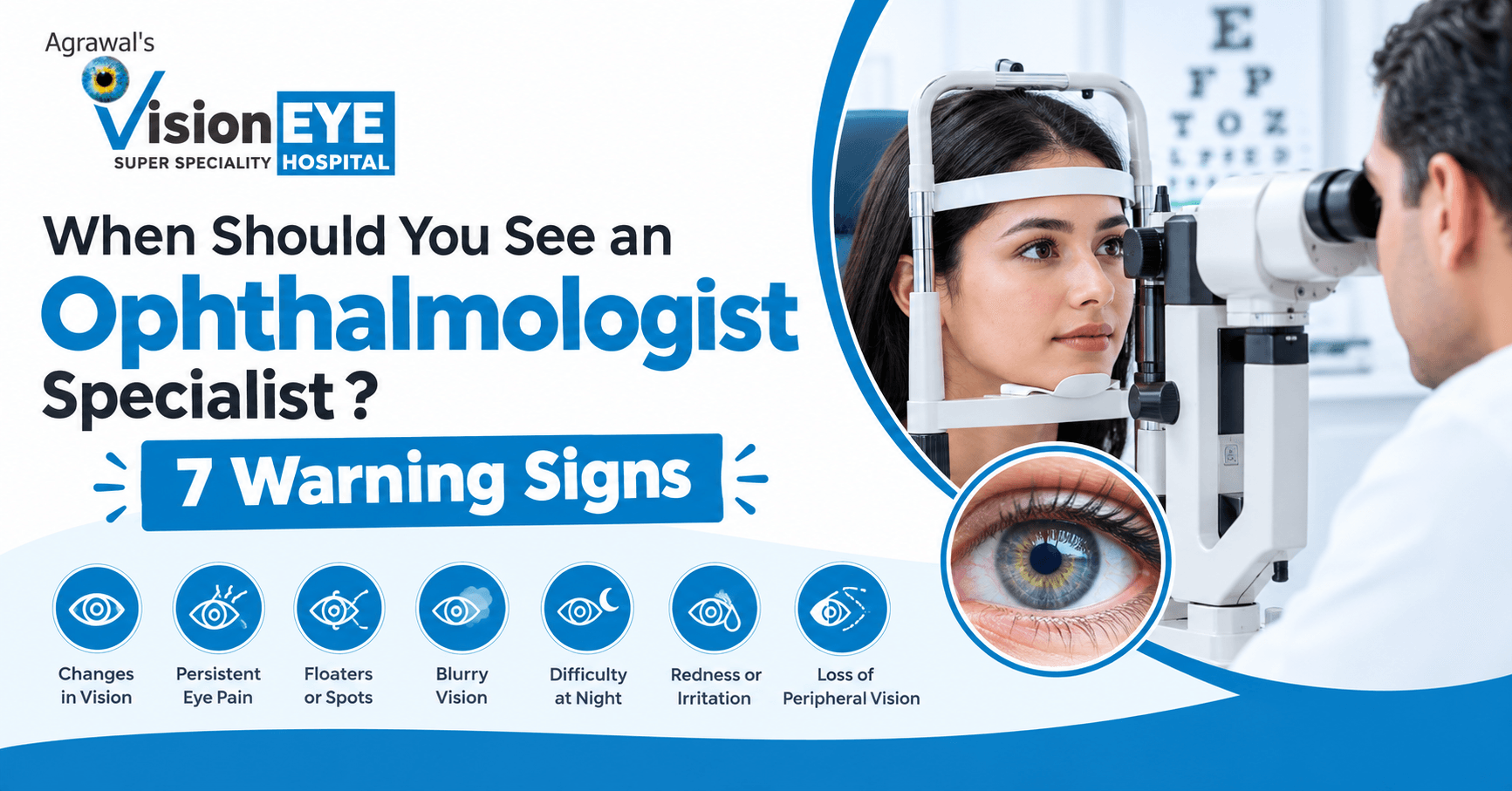
7 Warning Signs Your Eyes Need Medical Attention, Not Home Remedies
- Sudden blurring or vision loss in one eye
Painless, sudden dimming in one eye may point to a retinal or optic nerve problem. Cover each eye separately now and then; many people miss it otherwise.
- Flashes of light with a shower of new floaters
Black spots, cobwebs or lightning-like flashes can signal a retinal tear or detachment. This is an emergency; treatment within hours to days protects central vision.
- Eye pain with redness and halos around lights
Aching pain, haloes, nausea and blurring may indicate a sharp rise in eye pressure. Acute glaucoma harms the optic nerve fast, and that damage is permanent.
- A curtain, shadow or doubling in your field of vision
A dark curtain creeping across your sight is never simple tiredness. It needs prompt retinal and neurological assessment by a qualified eye specialist in Surat.
- Frequent spectacle power changes and night-time glare
If your number keeps shifting, or headlights scatter into starbursts while driving, cataract or an unstable refractive error is usually behind it.
- Diabetes, hypertension or a family history of glaucoma
Diabetic retinopathy and glaucoma stay silent early on. Yearly screening is the only reliable way to catch them while vision can still be saved.
- Any injury, chemical splash or foreign body
Never rub or self-medicate. Rinse a chemical splash with clean water for several minutes and reach an eye casualty immediately.
Who Needs Routine Eye Screening Even Without Symptoms?
Children should be checked before school age, as squinting and lazy eyes respond best when treated early. Adults deserve a baseline glaucoma and retina check with an ophthalmologist specialist in Surat at 40.
Diabetes, thyroid disease or long-term steroid use demands annual review however clear sight feels. Contact lens wearers need yearly corneal checks.
What Happens When You Book an Appointment With Eye Specialist Services
A proper visit is more than a vision chart. Expect refraction, eye pressure measurement, a slit-lamp examination and a dilated retinal check.
Dilating drops blur near vision for hours, so carry sunglasses and avoid driving home. Ask for a printed report – your baseline for future comparisons.
Choosing the best eye doctor in Surat comes down to postgraduate qualifications, transparent pricing and in-house diagnostics such as OCT and fundus imaging.
Your Eyes Rarely Shout - They Whisper First
Vision loss seldom announces itself. It creeps in through symptoms small enough to postpone, which is why timely consultation with an ophthalmologist specialist in Surat matters.
Vision Eye Hospital, founded in 2011 by Dr Shailesh Agrawal, MS (Ophthalmology) Gold Medallist, offers cataract, glaucoma, retina, cornea and paediatric care across its Parle Point, Vesu and Parvat Patiya branches, with cashless insurance support.
If any sign above sounds familiar, book with an ophthalmologist specialist in Surat this week. One sitting settles what months of guessing cannot.
FAQs:
1. How often should a healthy adult get an eye test?
Every two years until the age of 40, then once annually after that. Diabetics, glaucoma suspects and high-power spectacle wearers need yearly checks regardless of age. A reliable eye specialist in Surat will set your own recall interval after reviewing your retina, eye pressure and family history.
2. Is an optometrist the same as an ophthalmologist?
No, and the difference matters. An optometrist tests vision and dispenses spectacles or contact lenses. An ophthalmologist is a medical doctor holding a postgraduate degree who diagnoses eye disease, prescribes medication and performs surgery. Serious or sudden symptoms always need the ophthalmologist, not merely a refraction test.
3. How quickly can I get an appointment with eye specialist teams in an emergency?
Most Surat eye hospitals hold walk-in slots for emergencies such as injury, chemical splash, sudden vision loss or retinal detachment symptoms. Phone ahead, describe your symptoms clearly, and request an urgent appointment with eye specialist availability the same day instead of booking through the routine queue.
4. Can screen-related eye strain need medical treatment?
Usually not, though persistent strain sometimes hides uncorrected power, dry eye disease or convergence weakness. If lubricating drops and regular screen breaks bring you no relief after a fortnight, get examined properly. Untreated dry eye can damage the corneal surface and gradually blur your vision.
5. How do I choose the best eye doctor in Surat?
Check postgraduate qualifications, surgical volume in your specific procedure, and whether diagnostics such as OCT are carried out in-house. Ask about complication rates and the follow-up policy. Genuine patient reviews and a clear, unhurried explanation of your options usually reveal the best eye doctor in Surat.
