

 No Comments
Your eyes can feel perfectly fine while diabetes quietly damages them. There’s no pain and often no blur at first. That’s what makes this condition so easy to miss.
Diabetic retinopathy is one of the most common eye complications of diabetes. The good news? Catching it early can protect your sight. Here’s what to watch for and when to act.
What Are the First Warning Signs of Diabetic Eye Damage?
In the early stages, diabetic retinopathy usually causes no symptoms at all. As it progresses, warning signs include blurred vision, floaters, trouble seeing in low light and gradually worsening eyesight. Regular eye screening is the only reliable way to spot it early.
What Is Diabetic Retinopathy?
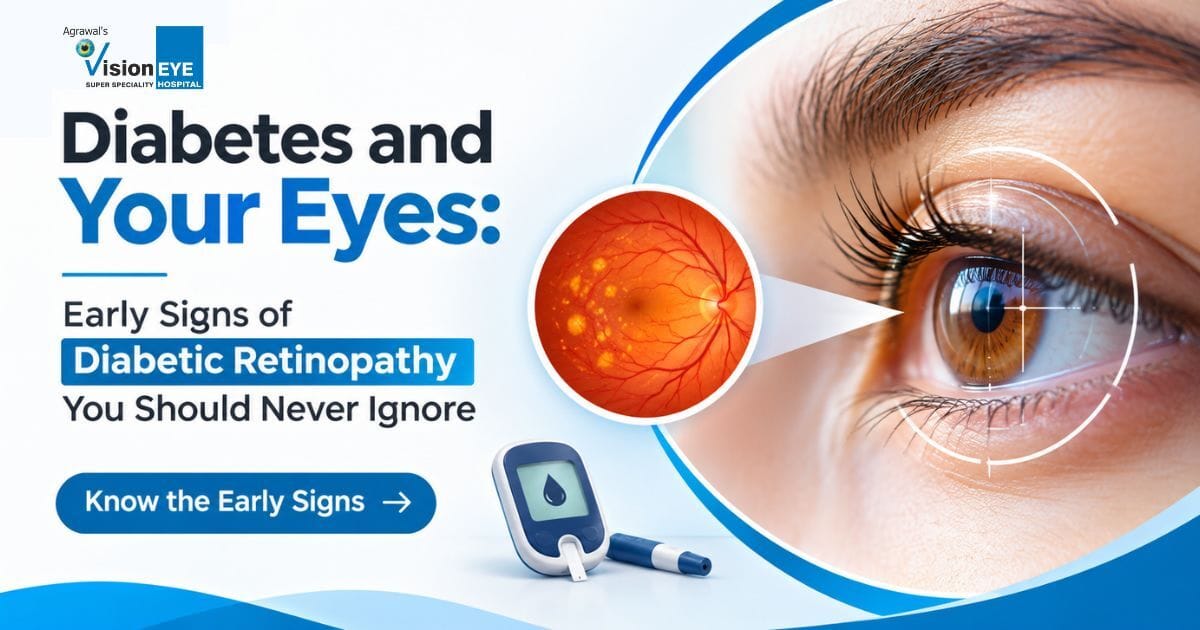
High blood sugar can damage the tiny blood vessels in the retina, the light-sensitive layer at the back of the eye. Over time, these vessels may leak, swell or close off. The eye may then grow fragile new vessels that bleed easily.
It’s a real concern in India. The SMART India study, cited in a joint RSSDI and VRSI position statement, found that 12.5% of people with diabetes had retinopathy. Around 4% had a sight-threatening form.
Diabetic Eye Disease Symptoms You Should Never Ignore
Early damage is often silent. When diabetic eye disease symptoms appear, they may include:
- Blurred vision that comes and goes or slowly worsens
- Floaters, seen as dark spots, dots or lines
- Difficulty seeing at night or in dim light
- Patchy or dark areas in your field of vision
- Colours looking faded
Symptoms can affect one or both eyes. Don’t wait for your next routine check if you notice these changes.
Seek urgent care if you experience sudden vision loss or a sudden shower of new floaters.
Who Is Most at Risk?
Anyone with type 1 or type 2 diabetes can develop eye damage. Your risk of diabetic retinopathy is higher if you:
- Have had diabetes for many years
- Have poorly controlled blood sugar
- Have high blood pressure or high cholesterol
- Are pregnant and living with diabetes
Why Diabetic Retina Screening Matters
Because early stages are symptom-free, diabetic retina screening is your best protection. An eye specialist examines the back of your eye, often after using drops to widen your pupils, or takes detailed retinal photographs.
Most people with diabetes should have their eyes checked at least once a year, or as often as their doctor advises.
Routine diabetic retina screening helps doctors start treatment before vision is affected. For people in Gujarat looking for diabetic retinopathy treatment in Surat, screening is the first step.
Treatment Options, Including Diabetic Retinopathy Laser Treatment
Treatment depends on the stage. In early stages, controlling blood sugar, blood pressure and cholesterol may be all you need.
For advanced disease, options include:
- Laser treatment to seal leaking vessels or stop abnormal ones growing
- Anti-VEGF eye injections to reduce swelling in the central retina
- Vitrectomy surgery to remove blood or scar tissue from inside the eye
Diabetic retinopathy laser treatment helps stabilise the eye and stop vision getting worse. However, it usually can’t restore sight that has already been lost. That’s why early detection matters.
Protect Your Sight Before Symptoms Start
Diabetes doesn’t have to cost you your vision. Regular check-ups and good diabetes control make a real difference.
If you’re living with diabetes, don’t wait for blurred vision to book an eye test. Early diabetic retinopathy is far easier to manage.
At Vision Eye Hospital, our retina team offers careful assessment and personalised advice. If you’re looking for diabetic retinopathy treatment in Surat, explore our retina care services and book your eye check today.
FAQs :
1. Can diabetic retinopathy be cured?
There’s currently no cure for sight loss. However, treatment can slow or stop further damage. Good control of blood sugar, blood pressure and cholesterol, plus timely care, helps many people with diabetic retinopathy keep useful vision for many years.
2. How often should people with diabetes get an eye test?
Most people with diabetes should have a full dilated eye examination at least once every year. Your eye doctor may suggest more frequent checks if any early changes are found, if you’re pregnant or if your diabetes is poorly controlled.
3. Is diabetic retinopathy laser treatment painful?
Diabetic retinopathy laser treatment is usually done as an outpatient procedure with numbing anaesthetic eye drops. Most people only feel mild discomfort or brief stinging rather than pain. Your vision may be blurred for a while afterwards, so avoid driving.
4. Can type 2 diabetes cause eye problems early?
Yes, it can. Some people with type 2 diabetes already have eye changes when they’re first diagnosed, because blood sugar may have been high for years unnoticed. That’s why an eye check soon after diagnosis is strongly recommended by doctors.
5. Where can I get diabetic retinopathy treatment in Surat?
Look for an eye hospital with experienced retina specialists and modern retinal diagnostic equipment. For diabetic retinopathy treatment in Surat, book an assessment at Vision Eye Hospital so a specialist can examine your retina and recommend the most suitable care for your specific stage.
