

Cataract Symptoms and Treatment
Cataract Symptoms and Treatment What You Need to Know
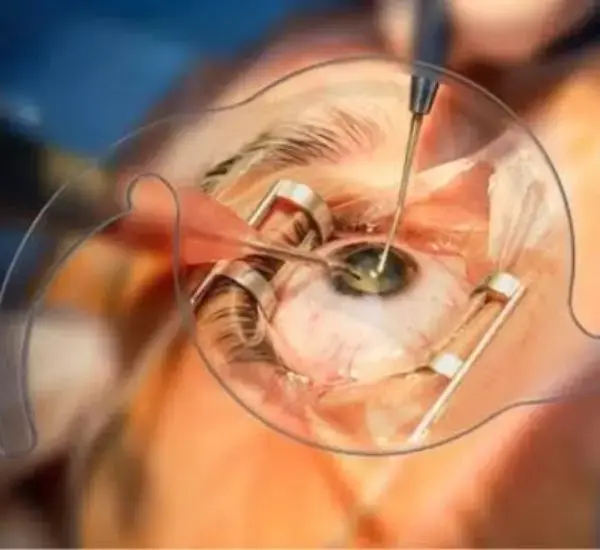
Most people don’t notice a cataract forming until it starts changing how the world looks. Colours seem duller than they used to. Headlights glare more on the drive home. Reading in dim light gets harder, and the glasses that worked fine last year suddenly don’t. Understanding Cataract Symptoms and Treatment early matters, because cataracts develop slowly, and it’s easy to write the change off as normal ageing. At Vision Eye Hospital in Surat, we see this delay often. Patients mention cataract symptoms to us only after months of managing around them, simply because nothing hurts. Spotting early cataract signs, and knowing what treatment actually involves, means you can act before your vision starts limiting daily life.
Recognising Early Cataract Signs
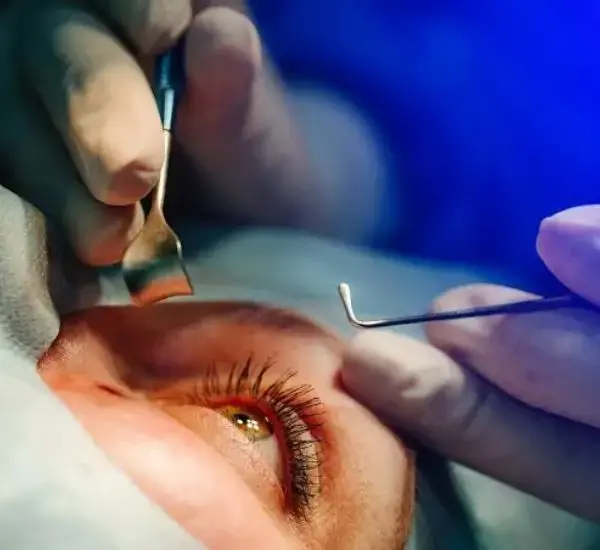
- Blurred, hazy or slightly cloudy vision, even with the correct glasses prescription
- Colours appearing faded or yellowed
- Increased sensitivity to bright light and glare, particularly headlights at night
- Difficulty seeing clearly in low light or after dusk
- Frequent changes in eyeglass or contact lens prescription
- Seeing halos around lamps or streetlights
- Double vision in one eye
How Cataracts Are Diagnosed
A cataract diagnosis starts with a proper eye examination, not guesswork. At Vision Eye Hospital, this includes a visual acuity test, a slit-lamp examination to view the lens under magnification, and a dilated eye exam to check the back of the eye. If surgery looks likely, we also measure your cornea’s curvature and eye length, since these figures decide the correct lens power. It takes one visit to know whether you’re dealing with a cataract, a refractive error, or something else.
What Causes Cataracts
Ageing is the most common cause, which is why cataracts are so widespread among people over 50. Proteins in the eye’s lens break down over time and clump together, clouding the area they occupy. Sun exposure, diabetes, smoking, previous eye injury and long-term steroid use all contribute too, alongside family history. None of this is within your control once a cataract has started forming, which is exactly why acting on it early matters.
Cataract Symptoms and Treatment Options
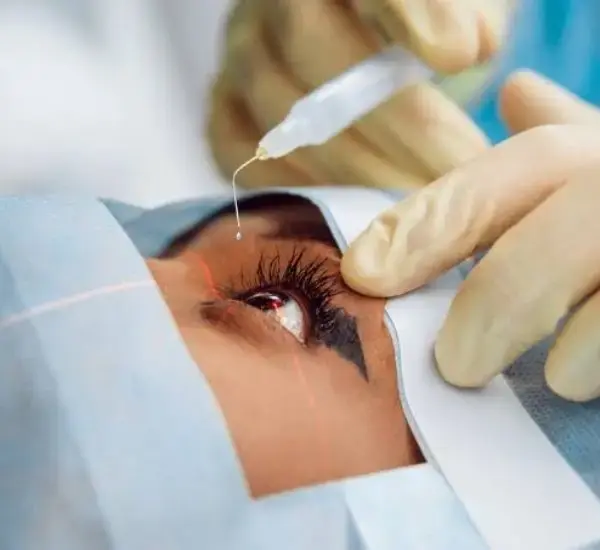
Not every cataract needs surgery immediately. In the early stages, a stronger glasses prescription, better reading light, or anti-glare lenses can manage mild vision changes for a while. Once the clouding starts interfering with reading, driving or recognising faces, surgery becomes the only way to restore clear vision, since cataracts don’t reverse on their own.
Cataract surgery replaces the clouded natural lens with a clear artificial intraocular lens, or IOL. The most common technique, phacoemulsification, uses ultrasound energy to break the lens into fragments removed through a tiny incision. It’s done under local anaesthesia, takes about fifteen minutes, and needs no overnight stay. Your surgeon may recommend a monofocal lens for distance vision, a toric lens for astigmatism, or a multifocal lens for a wider range of vision without glasses, depending on your eyes and lifestyle. Getting this choice right matters as much as the surgery itself.
When to See an Eye Doctor
Outpatient Phacoemulsification Surgery
The procedure is performed on an outpatient basis with same-day discharge.
Full Range of IOL Options
Choose from monofocal to advanced presbyopia-correcting lenses.
Comprehensive Eye Examinations
Using slit-lamp and dilated assessment—not just a quick screening.
Three Convenient Branches Across Surat
Access follow-up care at a location that fits your schedule.
Personalised Lens Selection Guidance
Lens recommendations are based on your eyes and lifestyle—not a one-size-fits-all answer.
Take the Next Step
Blurred vision, glare and fading colours don’t fix themselves, and waiting rarely makes the decision easier. If any of the signs above sound familiar, book an eye examination at Vision Eye Hospital and get a clear answer on Cataract Symptoms and Treatment suited to your eyes.
FAQs
1. What are the earliest signs of a cataract?
Blurred vision, fading colours, glare from headlights and frequent changes to your glasses prescription are usually the first signs. They develop gradually, so many people notice them only in hindsight, once daily tasks feel harder.
2. Can cataracts be treated without surgery?
Early cataracts are often managed with an updated glasses prescription or brighter reading light. Once vision loss starts affecting driving, reading or recognising faces, surgery becomes the only treatment that restores clear sight.
3. Is cataract surgery painful?
No. The procedure uses local anaesthesia and takes about fifteen minutes to perform. Most patients feel mild pressure at most, with little discomfort afterwards and clear vision improving within a few days.
4. How do I choose the right intraocular lens?
Your surgeon reviews your eye measurements, lifestyle and vision goals, then recommends a monofocal, toric or multifocal lens accordingly. This choice is discussed in full detail before your surgery date is confirmed.
5. When should I book a cataract check-up?
OUR APPROACH
Glaucoma is today one of the commonest causes for irreversible vision loss, particularly in India. At Vision Eye Hospital, we make a special effort to detect glaucoma in its earliest stages before it causes a total loss of vision. The Glaucoma Clinic is staffed by experienced experts whose published studies of glaucoma and its care have been recognized as the most quoted opinions among eye doctors. Our doctors use their vast experience to help the patients choose the best course of treatment from medication, laser treatment or surgery. The doctors also provide evaluations of the diagnosis and the treatment options to the patients.
OUR PROCESS
We perform an extensive array of diagnostic tests aimed at detecting the disease as well as monitoring the response to therapy. These include intraocular pressure monitoring, visual field testing, optic nerve head analysis like GDx, OCT. The extensive diagnostic testing process helps the doctor to evaluate the best treatment option. The aim is to choose therapy that is best suited to the individual’s eye and lifestyle. We offer an entire range of treatments right from the non-invasive SLT Laser treatment to surgery, depending on the patients’ need and disease profile.
SLT (Selective Laser Trabeculoplasty)
The SLT technology is safe, selective and smart. It is the latest technology and is extremely safe as it does not cause any systemic or local side effects. A laser light is used to selectively target only specific cells, leaving the surrounding tissue intact. It stimulates the body’s natural mechanisms to enhance outflow of the fluid in the eye.
Surgeries for Glaucoma
Nowadays, microinvasive glaucoma surgery is available, including Express Filtration Device, iStent and several others, which have made surgery much safer and predictable.
Glaucoma Family Clinic at Vision Eye Hospital
Glaucoma is often an inherited disorder and adverse effects on vision can be prevented by screening and detecting individuals at higher risk. If one of your family members has glaucoma, you need to get yourself screened by a glaucoma expert.
GLAUCOMA DIAGNOSTICS
- Optic nerve analyzer – GDX and OCT
- Humphery visual field analysis
- Anterior segment OCT
- Corneal Pachymetry
OUR SKILLS & TALENTS
Headed by the renowned glaucoma expert, Dr. Khushboo Patel, this clinic is staffed by experienced experts whose published studies of glaucoma and its care have been recognized as the most quoted opinions among eye doctors. They have also won many prestigious awards for the same.
