

 No Comments
Blurred or cloudy vision can make everyday activities such as reading, driving, and recognising faces increasingly difficult. Many people initially look for cataract glasses to improve their eyesight, while others consider surgery after receiving a diagnosis. Although updated spectacles may offer temporary visual improvement in the early stages, they cannot remove cataracts or restore the eye’s natural clarity. Understanding the difference between corrective eyewear and surgical treatment helps patients make informed decisions about protecting their long-term vision and eye health.
Can Glasses or Surgery Provide Better Vision for Cataracts?
In the early stages, updated glasses may improve vision slightly by correcting refractive errors. However, once cataracts progress and the eye’s natural lens becomes significantly cloudy, cataract surgery is the only clinically proven treatment that removes the cataract and restores clearer vision.
Understanding How Cataracts Affect Vision
A cataract develops when the eye’s natural lens gradually becomes cloudy, preventing light from passing through clearly. This process usually occurs with ageing but may also be influenced by certain medical conditions, eye injuries, prolonged steroid use, or lifestyle factors.
Common cataract symptoms include blurred vision, glare from lights, faded colours, poor night vision, and frequent changes in spectacle prescriptions. As the cataract progresses, these symptoms can increasingly interfere with daily activities and overall quality of life.
Can Cataract Glasses Correct Cloudy Vision?
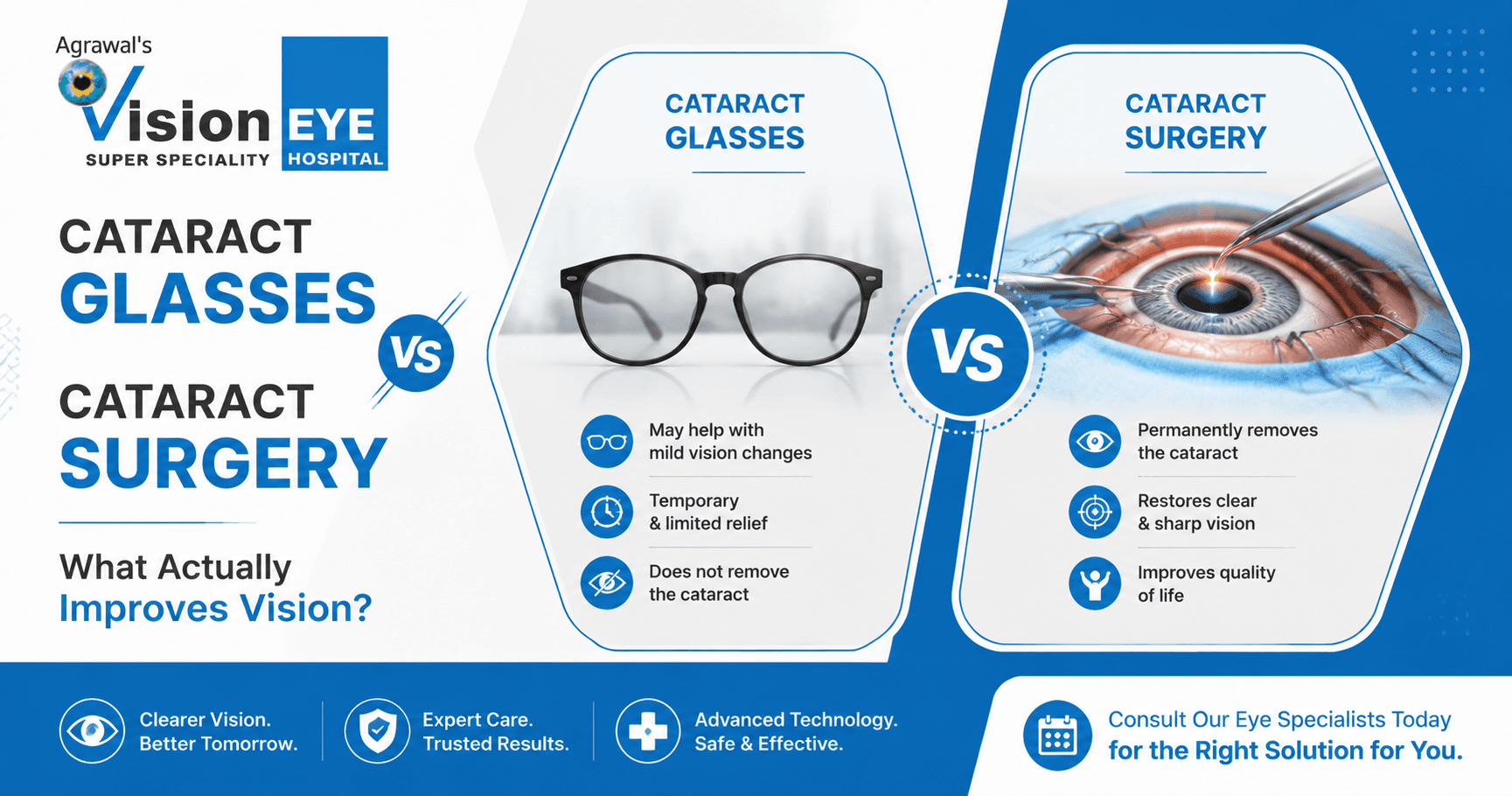
Many patients ask whether new spectacles can eliminate cataracts. In reality, cataract glasses do not treat the cloudy lens itself. They simply adjust the way light is focused, offering temporary improvement if refractive changes are mild.
Some individuals may benefit from prescription glasses for cataract during the early stages, particularly if their vision changes are minor. However, once lens clouding becomes more advanced, glasses alone are unable to restore clear, sharp vision.
When Is Cataract Surgery Recommended?
Cataract surgery is generally recommended when vision loss begins to affect everyday tasks such as reading, driving, working, or recognising faces. The procedure involves removing the cloudy natural lens and replacing it with a clear artificial intraocular lens (IOL).
Modern cataract surgery is one of the most commonly performed ophthalmic procedures worldwide. It is typically completed as a day-care procedure, allowing most patients to return home on the same day with appropriate post-operative care and follow-up.
Cataract Glasses vs Surgery: Key Differences
The primary difference lies in what each option achieves. Glasses compensate for refractive changes but cannot remove the cataract itself. Surgery directly addresses the underlying cause by replacing the cloudy lens with a clear artificial lens.
For patients experiencing significant vision impairment, surgery offers a more lasting solution. An eye specialist evaluates the severity of the cataract, visual needs, and overall eye health before recommending the most appropriate treatment plan.
Why Early Eye Examinations Matter
Regular comprehensive eye examinations help detect cataracts before vision becomes severely affected. Early diagnosis allows patients to monitor changes, discuss treatment options, and receive timely advice tailored to their individual needs.
People experiencing persistent blurred vision, increased glare, or frequent prescription changes should seek professional evaluation rather than relying solely on self-adjusted eyewear or over-the-counter solutions.
Final Thoughts
While cataract glasses may provide temporary visual improvement during the early stages, they cannot remove the cloudy lens responsible for cataracts. When vision loss begins affecting daily life, cataract surgery remains the most effective and evidence-based treatment. Vision Eye Hospital provides comprehensive cataract evaluation, personalised treatment planning, and advanced surgical care to help patients achieve clearer vision and improved quality of life.
FAQs :
1. Can cataract glasses cure cataracts?
No. Cataract glasses cannot cure cataracts because they do not remove the cloudy lens inside the eye. They may temporarily improve vision by correcting refractive errors, but surgery is the only treatment that effectively restores vision by replacing the affected natural lens.
2. When should I consider cataract surgery?
Cataract surgery is usually considered when blurred vision starts interfering with daily activities such as reading, driving, or recognising faces. An ophthalmologist will assess your eye health, vision needs, and the progression of the cataract before recommending the appropriate treatment.
3. Are prescription glasses helpful for early cataracts?
Yes. Prescription glasses for cataracts may improve vision during the early stages if refractive changes are the main issue. However, as the cataract progresses and the lens becomes cloudier, updated spectacles become less effective at improving visual clarity.
4. What are the first signs of cataracts?
Early cataract symptoms often include cloudy or blurred vision, glare around lights, reduced night vision, faded colour perception, and frequent changes in spectacle prescriptions. A comprehensive eye examination is essential for confirming the diagnosis and determining the most suitable management approach.
5. Is cataract surgery safe?
Modern cataract surgery is considered a safe and highly effective procedure when performed by qualified eye specialists. Careful pre-operative assessment, advanced surgical techniques, and proper post-operative care help achieve favourable outcomes while supporting long-term visual improvement for most eligible patients.
